Welcome to the Mathematical World!
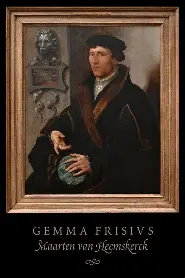
Gemma Frisius (1508 – 1555)
Mathematician, Cartographer, and Pioneer of Triangulation
Gemma Frisius was a mathematician and cartographer who advanced navigation and map-making through the systematic use of triangulation. He formalized methods for determining positions accurately on Earth, allowing early explorers and surveyors to measure distances and angles with precision. For example, given a baseline \(AB\) and measured angles \(\angle ACB\) and \(\angle BAC\), triangulation allows calculation of unknown distances using the law of sines: \[ \frac{AB}{\sin \angle ACB} = \frac{AC}{\sin \angle ABC} = \frac{BC}{\sin \angle BAC}. \]
Frisius combined theoretical geometry with practical application, showing that mathematical principles could solve real-world problems in navigation and exploration. His work influenced Gerardus Mercator, leading to the development of highly accurate maps, globes, and navigational tools that guided explorers across oceans.
He also promoted the systematic study of instruments and measurement techniques, blending geometry, astronomy, and geography. Frisius’ insights demonstrate how rigorous mathematical thinking can enhance exploration, commerce, and scientific understanding, establishing him as a key figure in practical mathematics during the Renaissance.
Facts:
- Born in Friesland, Netherlands.
- Developed triangulation methods for surveying and mapping.
- Worked on globe-making techniques and cartographic accuracy.
- Mentor to Gerardus Mercator, influencing map projections and navigation.
- Applied mathematics to real-world navigation problems.

All rights reserved by the Mathematical Unity
Contact: +8801400044645
Email: mathematicalhorse1453@gmail.com
Our Discord Server: Mathematical Unity [Ulus Riyadiyat]